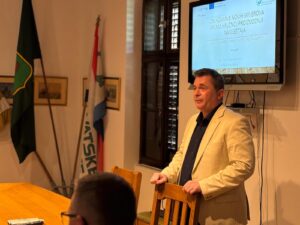
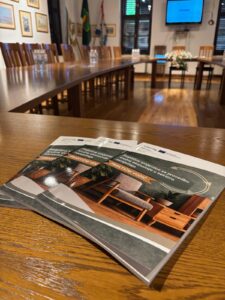
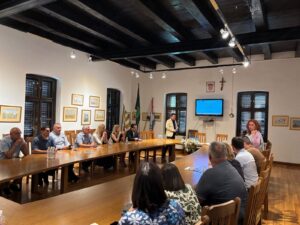
On June 10, at the Forestry Museum in Bošnjaci, a manual developed within the framework of the FULAR project was presented to representatives of institutions, organizations, and other relevant stakeholders during a session of the Wood Technology Engineers Section of the Croatian Chamber of Forestry and Wood Technology Engineers.
The FULAR project is focused on promoting sustainability and circularity in the furniture industry across the IPA ADRION region, which includes Greece, Italy, Albania, Bosnia and Herzegovina, Serbia, Slovenia, and Croatia. Its main objective is to support SMEs in adopting greener production practices and facilitate their alignment with EU sustainable development strategies.
Throughout the project, numerous activities were carried out, including research on the perception of circular approaches among businesses and consumers, analyses of best practices, identification of sustainable materials, and the development of innovative and cost-effective production technologies. Particular emphasis was placed on creating practical solutions that contribute to more sustainable business operations.
One of the project's key outcomes is the development of practical circular economy guidelines for the furniture sector, prepared by the project consortium. The manual serves as a comprehensive source of knowledge, providing companies with practical guidance for transitioning from linear to circular business models. It covers topics such as circular design, sustainable materials, recycling and reuse technologies, digital tools, as well as the regulatory framework and market opportunities. Through a clear and practical approach, the manual supports companies in implementing circular solutions aimed at reducing waste, improving resource efficiency, and strengthening market competitiveness.
The manual is available at the following the link
The FULAR project also includes the development of furniture prototypes made from alternative materials, the organization of international workshops and circular design competitions, as well as the preparation of a joint strategy for the further development of the sector.
We would like to thank all partners and stakeholders who participated in the development and dissemination of this valuable resource and contributed to strengthening sustainability within the furniture sector.