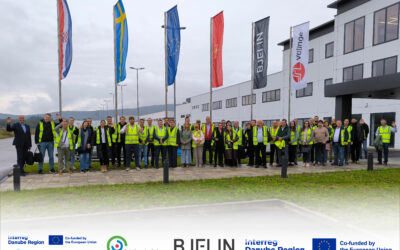
On October 29 and 30, 2025, representatives of the REBIOFORESTS consortium participated in a two-day workshop and field visit organized by the research institute NEIKER (Basque Institute for Agricultural Research and Development) in Derio.
The NEIKER Institute, the host of the study visit, is a leading research center in the fields of agriculture, forestry and the environment in the Basque region. Through innovative scientific projects, it is focused on the development of sustainable technologies and methodologies that improve the competitiveness and sustainability of the primary sector. The exchange of knowledge and experience with NEIKER enabled partners and stakeholders to access the latest scientific knowledge and regional experiences, which are key to achieving common goals within the REBIOFORESTS project.
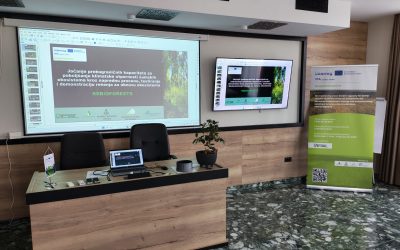
On the first day, a workshop was held in the premises of the NEIKER Institute, where the partners of the consortium presented their activities, past results and current projects. The ecological challenges of forest ecosystems were discussed, including the health of forests in the Basque Country and the threats identified in the forests of Croatia. Special emphasis was placed on the application of biotechnology in improving forest management and climate change adaptation. Examples of successful forest restoration in the Basque Country were also presented, namely planting methods, soil protection and biodiversity conservation, which stimulated a discussion on the possibilities of their application in the Spačva-Bosut basin.
The second day was dedicated to a field trip to the forest areas of the Basque region. Participants visited different types of forests – from plantations to natural ecosystems – and through expert guidance were introduced to methods of sustainable management, logging, thinning and conservation of natural habitats.
The entire visit emphasized the importance of an integrated approach to sustainable forest management, which combines scientific knowledge, practical restoration methods and strategies for preserving genetic diversity. In addition to the professional aspect, the study visit contributed to strengthening cooperation among project partners, exchange of experiences and identification of potential solutions for increasing the resilience of forest ecosystems to climate change. In conclusion, the visit provided examples of good practice that can be applied in the Spačva-Bosut Basin.